Signing In and Exploring the Developer Portal
To start using the TKE Customer API, make sure you have an active user account in TKE Customer Portal.
If you already have a TKE Customer Portal user, please make first access to the Developer Portal using one of the following environments:
Production Europe / Africa (EA) - https://developer.ea.tkelevator.com/signin
Production Asia / Pacific (AP) - https://developer.ap.tkelevator.com/signin
Production Americas (AMS) - https://developer.ams.tkelevator.com/signin
Test environment - https://max-customerapi-stable.developer.azure-api.net/signin
If you do not have an account, please visit the developer portal for your region, Getting Started session and request your access by filling in the form.
Production Europe / Africa (EA) - https://developer.ea.tkelevator.com/getting-started
Production Asia / Pacific (AP) - https://developer.ap.tkelevator.com/getting-started
Production Americas (AMS) - https://developer.ams.tkelevator.com/getting-started
Test environment - https://max-customerapi-stable.developer.azure-api.net/getting-started
Understanding Equipment Access Control
Our Customer API gives you access to your entire equipment portfolio, including elevators and escalators. This access is managed by your commercial contact and by the branch responsible for your API contract with TKE. If you need any changes to your portfolio access, please contact your local commercial team and they will provide the necessary support.
Making Your First API Call– Listing Your Units
To start calling the API, please Log in to the developer portal, with your username and password (Customer Portal credentials)
1. Please find the Customer API Developer Portal environment based on your localization and log in
Production Europe / Africa (EA) - https://developer.ea.tkelevator.com/signin
Production Asia / Pacific (AP) - https://developer.ap.tkelevator.com/signin
Production Americas (AMS) - https://developer.ams.tkelevator.com/signin
Test environment - https://max-customerapi-stable.developer.azure-api.net/signin
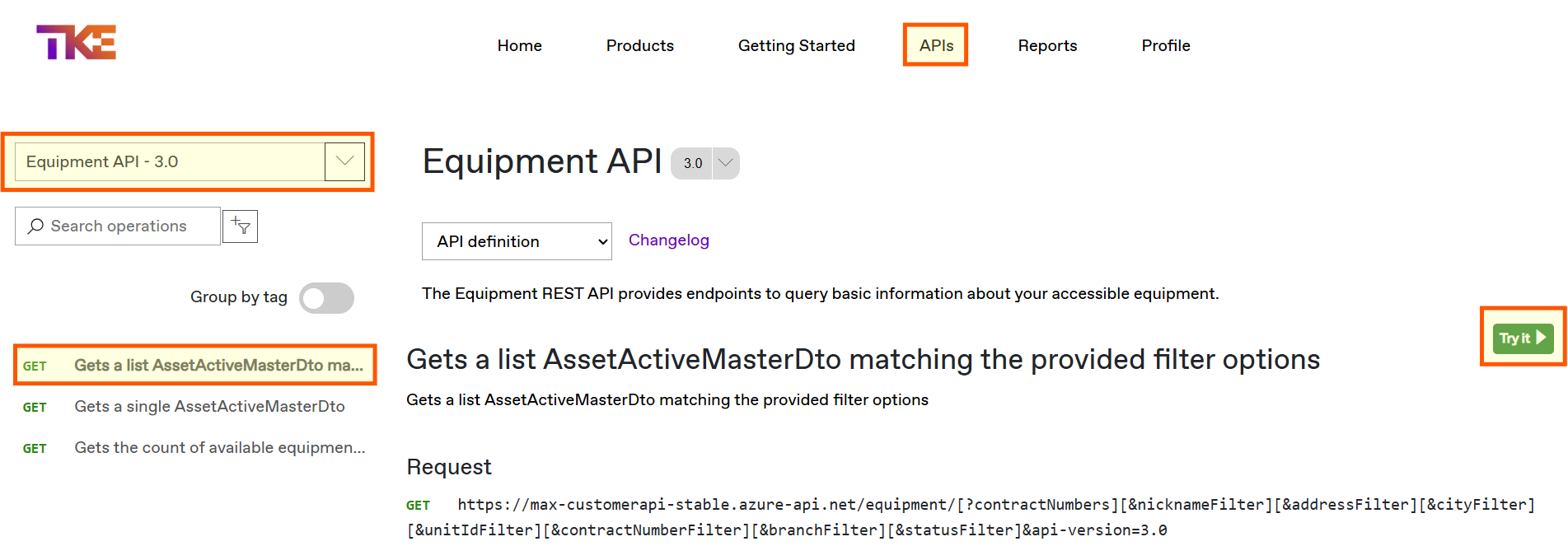
2. Access the APIs menu and click on Equipment API or on other API you are subscribed to

3. Listing your equipment portfolio via the API
Let’s start by listing your equipment (units) and looking at the properties unitIDs, deviceID and tenantIDs for each equipment in the list.
These IDs are unique identifiers for each piece of equipment. You will also use them when calling other detailed APIs and when identifying a specific unit.
To call the Equipment API, select the correct option and then click Gets a list.
After that, click Try it, and a page with the parameters will open.
4. On the parameters page, select ‘Implicit’ in the Authorization Flow field, then navigate to the bottom of the page and click the Send button.
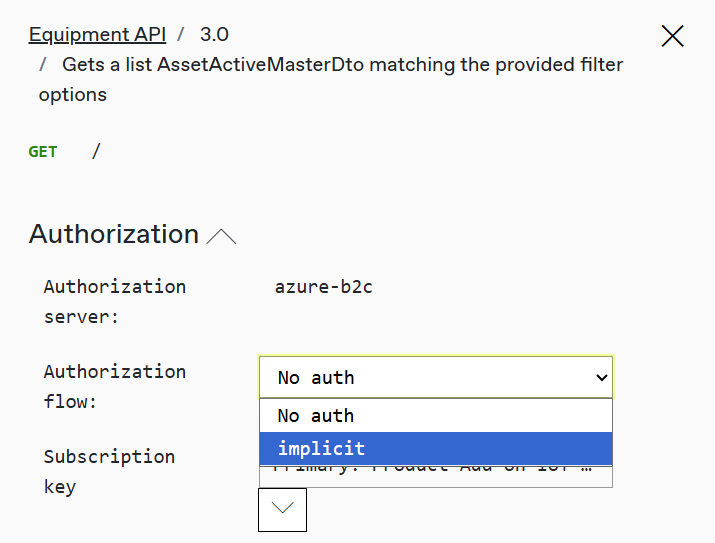
5. Click ‘Send’ to make the API request
6. You will see the results at the bottom of the page and find the equipment portfolio in a Json format
NOTE: If you call the EQUIPMENT LIST API and the unit list is empty, please request access to your units in the Customer Portal by contacting your sales representative.
Calling other endpoints
All other endpoints require a tenantID, unitID, or deviceID to identify a specific piece of equipment and return data for that unit.
Once you have a list of units and their individual IDs, you can call other APIs, such as the Equipment API to retrieve a single asset or the Elevator Statistics API.
tenantId: Use the Equipment API to get an ID
unitId: Use the Equipment API to get an ID
deviceId: Use the Equipment API to get an ID
You can use these IDs directly in the Developer Portal as filters, as shown in the image below.
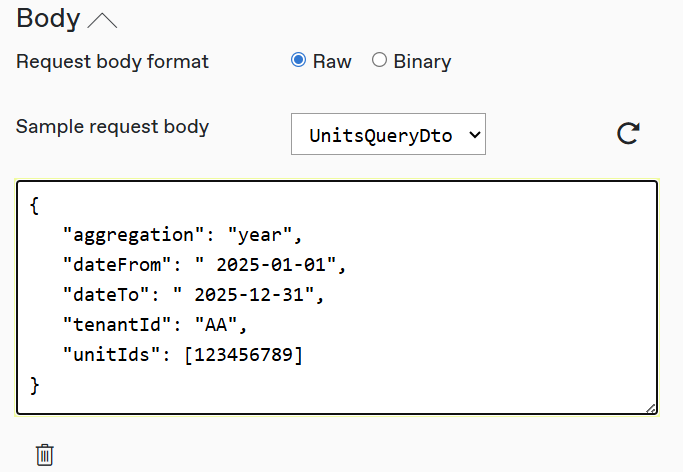
In other endpoints, such as the Statistics API, you will also need to define a date period in the payload, as shown below.
{
"aggregation": "year",
"dateFrom": " 2025-01-01",
"dateTo": " 2025-12-31",
"tenantId": "AA",
"unitIds": [123456789]
}